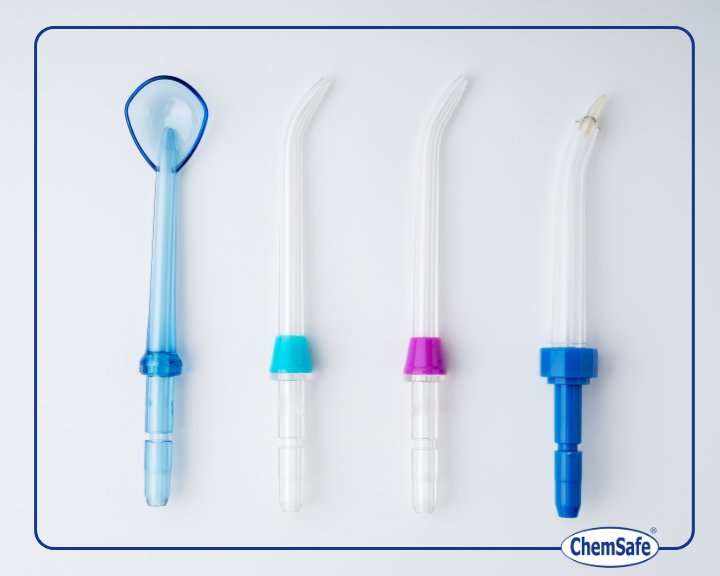
Microplastics have moved from an environmental headline to a concrete compliance issue for the medical device industry. In October 2023, the European Union introduced Commission Regulation (EU) 2023/2055, the most far-reaching restriction on intentionally added microplastics adopted so far under REACH, and medical devices are explicitly within its scope.
The presence of micro-plastics within these devices cannot be ignored now and it is crucial to understand what is required from the regulations.
What Is a Synthetic Polymer Microparticle Under EU Law?
The REACH regulation does not concern all plastic particles available on the market; its scope, as defined in Entry 78 of Annex XVII, is limited to synthetic polymer microparticles (SPM) that are intentionally added to a substance or mixture to confer a specific, sought-after characteristic.
An SPM is a solid polymer making up at least 1% of a particle’s weight, where at least 1% of those particles have all dimensions of 5 mm or less, or, for fibres, a length of 15 mm or less with a length-to-diameter ratio above 3. Natural, biodegradable, water-soluble and carbon-free polymers are excluded from the designation, as clarified in the European Commission’s Explanatory Guide to Entry 78.
This distinction is central to the restriction: where SPM presence results from the unintentional breakdown of a larger plastic object, Entry 78 simply does not apply, as the Commission’s implementation guidance makes explicit.
The EU Regulatory Framework: REACH Annex XVII, Entry 78
The legal response sits within REACH. Entry 78 of Annex XVII prohibits the placing on the market of SPM, on their own or in mixtures, above a concentration of 0.01% by weight, unless a specific derogation applies. The European Commission’s implementation guidance describes it as the broadest restriction adopted under REACH to date, both in scope and expected impact. In vitro diagnostic devices face only delayed information duties from 17 October 2026, per ECHA’s reporting guidance.
Medical devices placed on the market as a substance or mixture under Regulation (EU) 2017/745 (MDR), by contrast, benefit only from a transitional derogation until October 17, 2029. A further correcting act, Commission Regulation (EU) 2026/1168, has since clarified the scope of these derogations, including for particles permanently bound in a solid matrix, with certain solid-matrix applications requiring re-assessment before June 22, 2028.
A Related but Distinct Restriction: Silicones (D4, D5, D6)
Silicone-based materials generally sit outside Entry 78, since polymers such as polydimethylsiloxane do not typically take the solid, particulate form the SPM definition requires.
A separate REACH restriction is nonetheless directly relevant to silicone medical devices. Commission Regulation (EU) 2024/1328 amended Entry 70 of Annex XVII to restrict three cyclic siloxanes — octamethylcyclotetrasiloxane (D4), decamethylcyclopentasiloxane (D5) and dodecamethylcyclohexasiloxane (D6) — on persistence and bioaccumulation grounds unrelated to particle size.
Crucially for this industry, the same act includes a specific derogation allowing D5 and D6 to be placed on the market in devices under Regulation (EU) 2017/745 intended for the treatment and care of scars and wounds, wound prevention, and stoma care, an exemption that remains available until June 6, 2031.
What This Means for Manufacturers
Falling under an exemption does not mean falling outside the regulation. Where release cannot be excluded, manufacturers must provide instructions for safe use and disposal, submit annual estimates of released SPM quantities, with reporting obligations formalised through the ECHA reporting system published in April 2025, and keep technical documentation demonstrating eligibility for any derogation used. With the 2029 MDR deadline and the 2031 siloxane deadline both approaching, the compliance runway is shorter than it appears.
How We Can Help
Navigating overlapping REACH, MDR and IVDR requirements, mapping polymer and siloxane content across a device portfolio, and building defensible technical documentation demands both regulatory expertise and a solid toxicological understanding of particle and substance behaviour.
This is precisely where our team supports medical device manufacturers: material compliance gap analysis, derogation eligibility assessments and reporting strategy. If microplastics or restricted siloxanes are part of your device’s material profile, get in touch — we can help you turn these regulatory deadlines into a managed, documented process.
- Commission Regulation (EU) 2023/2055
- Regulation (EU) 2017/746 (IVDR)
- Regulation (EU) 2017/745 (MDR)
- Commission Regulation (EU) 2024/1328
- ECHA — Hot Topics: Microplastics
Contact us to create a compliance srategy and get ahead of Microplastics restriction.