Medical Device:
Manual on borderline and classification for medical devices: Fifth Version released
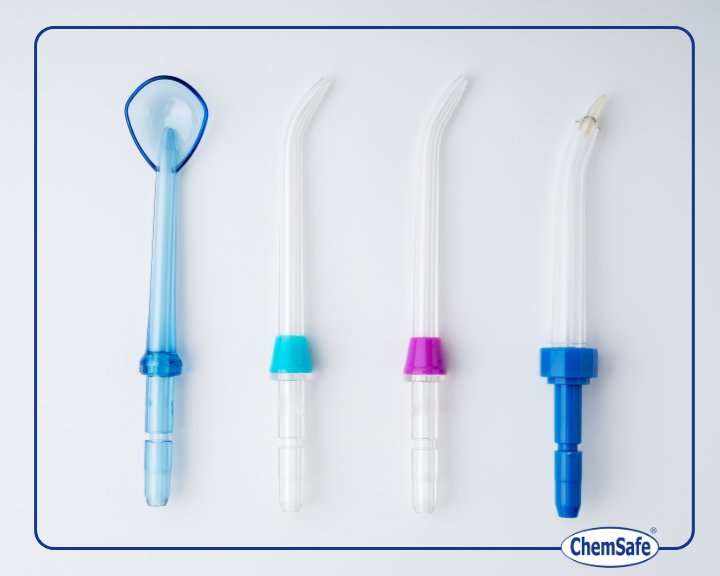
New clarifications for product qualification and risk assignment have been introduced. Notable updates include the classification of saline solutions for nasal irrigation and endodontic needles as Class IIa, alongside updated guidance for medical software and calculators. This manual remains an essential tool for ensuring the uniform application of MDR and IVDR regulations across the European Union.
Source: Manual on Borderline and classification for Medical Devices
Team-NB has released Version 4 (April 2026) of its “Best Practice Guidance for the Submission of Technical Documentation” under the MDR.
This comprehensive update incorporates recent regulatory developments, such as AI Act considerations and the new e-IFU Regulation, alongside updated standards like ISO 10993-1:2025. The revised guidance features significant new additions regarding “common pitfalls” observed by Notified Bodies, providing manufacturers with a critical roadmap to ensure high-quality submissions and avoid common certification delays.
Source: Team NB Position Paper
Publication of the third edition of ISO 10993-7:2026
Published in April 2026, the standard establishes updated requirements for ethylene oxide (EO) sterilization residuals in medical devices. This international standard specifies allowable limits for residual EO and ethylene chlorohydrin (ECH), along with detailed procedures for measurement and determining conformity for device release. It represents a crucial update for manufacturers to ensure the biological safety and compliance of EO-sterilized products.
ECHA:
Major IUCLID 6 release available
The Integrated System for Characterization of the Properties of Chemical Substances and serves as the key IT system for collection, storage, and submission of chemical data to ECHA.
ECHA has released a major update of IUCLID 6 (version 10.0.0), introducing significant changes to the system’s data format and functionalities used for regulatory submissions under REACH and other EU legislation.
The new version focuses primarily on format updates, requiring users to adapt their datasets and dossiers to ensure compatibility with the updated structure. These changes are designed to improve data quality, consistency and alignment with evolving regulatory requirements.
In addition to format changes, the release introduces new functionalities and improvements, helping users manage submissions more efficiently and better align with current regulatory processes.
ECHA Published the 2025 annual report
In 2025 ECHA has shown a strong commitment to ensuring the protection of human health and the environment, using high-level scientific and regulatory activities.
In an environment characterized by a growing complexity in terms of regulations, the agency was able to produce key outcomes within the framework of its mandate while at the same time preparing itself for future challenges due to new legislation regarding chemicals and the environment in the EU.
REACH:
Microplastics Reporting Updated Guidance
A new guidance from ECHA has been published regarding the reporting obligation on microplastics as per the restrictions of the REACH regulation.
Companies required to report in 2026 must submit their data on annual microplastics releases by May 31st 2026, covering estimated emissions for the year 2025. Reports must be prepared in IUCLID and submitted via REACH-IT.
The updated guidance is based on the new functionalities available in the recent version of IUCLID, including improved dossier update capabilities and a revised format for reporting emissions. ECHA has also announced that supporting materials, such as video tutorials, will be updated accordingly to assist companies with compliance.
Food:
GRAS Update: New GRAS Notices to approve
Several additional GRAS notices have recently been submitted and are now under FDA review. These latest notices are covering:
- Sweeteners, such as steviol glycosides, brazzein, citrus-derived compounds.
- Botanical ingredients, sch as rice protein, grape pomace.
- Probiotics.
- Ingredients derived from fermentation, such as erythritol and algal oil (≥45% DHA).
- Other ingredients.
Source: https://www.hfpappexternal.fda.gov/scripts/fdcc/index.cfm?set=GRASNotices